Phu Quoc's beaches in brief
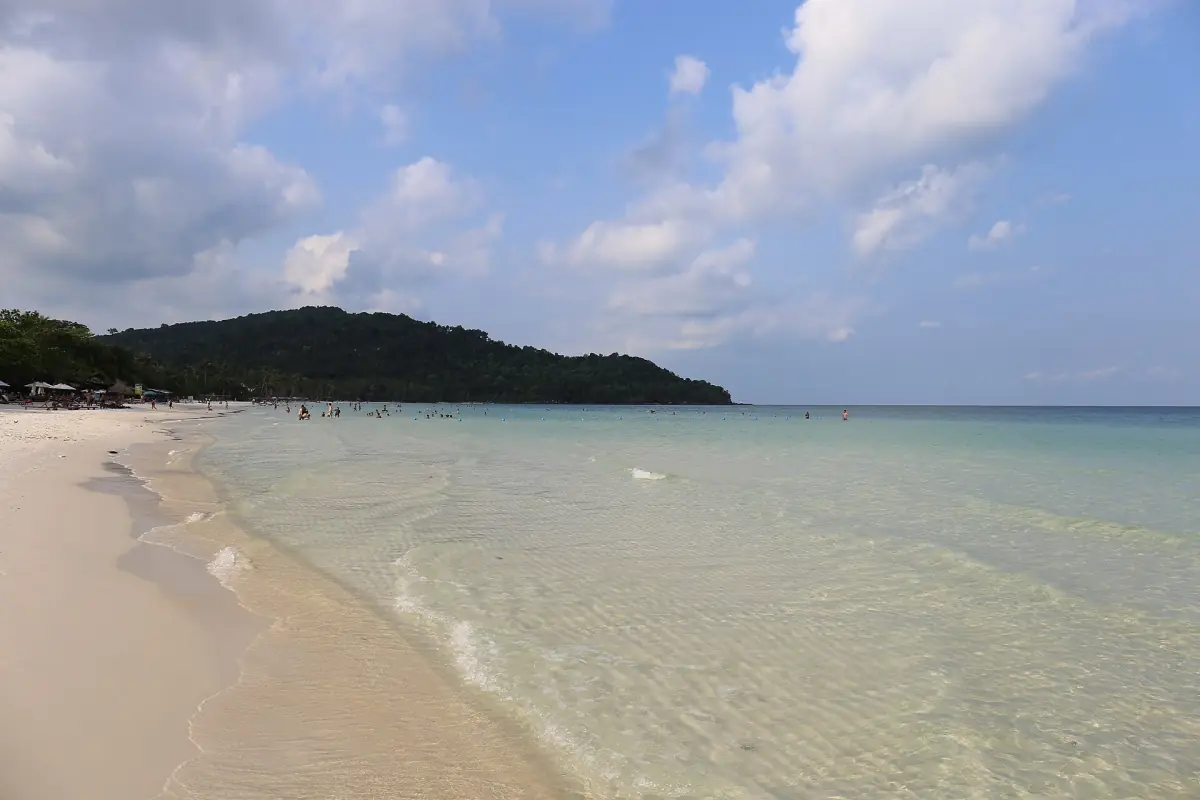
Phu Quoc has no single main beach. The coast changes from one bay to the next, and the practical details change with it: some stretches are public, some belong to a resort, and some come with beach restaurants or cafés. This guide covers eight beaches that the national tourism organization and operators name, from Sao Beach to Bai Dai.
Treat the descriptions as a starting point. We list what is known about location and character, not fixed fees. Prices for sunbeds, parking and showers vary by spot and are not published in one place, so ask before you pay. The numbered list below is our own selection, not a ranking by any authority.
The eight beaches compared
A quick view before the detail below.
| Beach | Where | What to know |
|---|---|---|
| Sao Beach | – | Public and private areas, restaurants on the sand |
| Long Beach | West coast | Sunset spot with cafés and bars |
| Ong Lang | North of Duong Dong | Several sandy bays with rocky sections between them |
| Khem Beach | South | A resort lies directly on the beach |
| Ganh Dau | Northern end of the west coast | Fishing boats and a view toward Cambodian islands |
| Vung Bau | West coast | Listed among the island's beaches |
| Bai Thom | North | Named among the northern beaches |
| Bai Dai | North-west | Beach of the VinOasis resort; the Safari lies in the same area |
Phu Quoc boat trips and beach days
Island trips, snorkeling and sunset cruises that reach the coast from the water, with live prices and availability.
The eight beaches
Numbered for reference, not ranked by quality.
1. Sao Beach
Sao Beach (Bai Sao) is the beach most visitors have in mind. The national tourism organization separates public and private areas and mentions restaurants right on the beach. That does not mean entry is free everywhere, and it does not mean a free table at a beach restaurant, so ask about any minimum order or sunbed charge.
2. Long Beach
Long Beach (Bai Truong) lies on the west coast and is a place to watch the sun go down, with cafés and bars along it. The cafés set their own hours, which are not set times for the beach itself. Rocks in the water add to the scenery.
3. Ong Lang
Ong Lang is north of Duong Dong. It is a run of sandy bays separated by rocky sections, so it is not a long unbroken sand beach. Wear shoes you can walk over rocks in, and look at the next bay before you decide where to stop.
4. Khem Beach
Khem Beach (Bai Khem) is in the south. The JW Marriott Phu Quoc states that it sits directly on the beach. That tells you about the resort only. It does not mean the whole beach is private or that you can walk through the hotel to reach it, so check access before you travel.
5. Ganh Dau
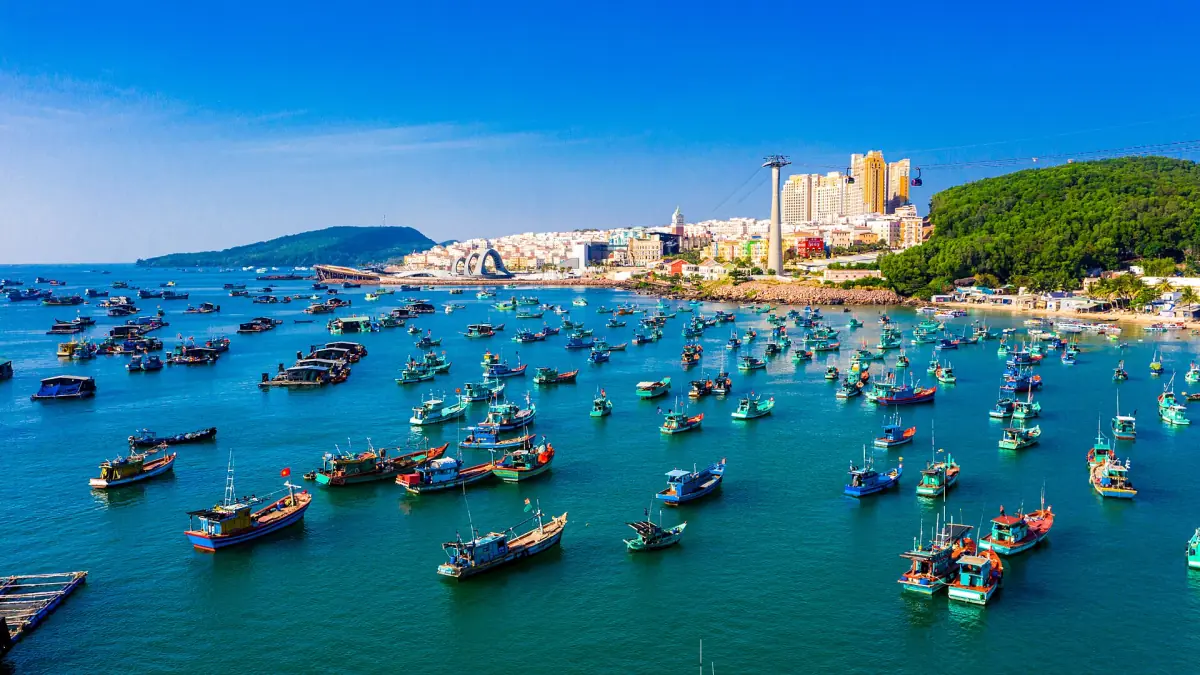
Ganh Dau lies at the northern end of the west coast. The national tourism organization describes the beach, fishing boats and a view toward islands off Cambodia. Older descriptions call it empty and undeveloped. That may no longer be true, so do not count on solitude.
6. Vung Bau
Vung Bau is on the west coast and is a separate stop from Long Beach. Current road access and beach services are not published, so ask your accommodation before you head out.
7. Bai Thom
Bai Thom is one of the beaches the national tourism organization lists in the north. Road quality and whether there is a supervised swimming area are not documented, so do not assume either.
8. Bai Dai
Bai Dai is the beach of the VinOasis resort in tourism descriptions, and the Vinpearl Safari gives Bai Dai and Ganh Dau as its area. That makes it a natural beach stop on a Safari day. Resort services described in older material may have changed.

Swimming and safety
No beach on Phu Quoc comes with a guarantee of calm water, jellyfish-free swimming or a lifeguard. Conditions change with weather and season. Look at the water before you go in, ask your hotel or a local café about the day's conditions and stay out when the sea is rough.
If you take a boat to a beach or island, the transport authority of An Giang province requires passengers to wear life jackets before the boat leaves, after a boat accident in July 2026. See our snorkeling guide.
When to go
The national tourism organization names November to April as the favorable period. Monthly figures from the Japan Meteorological Agency station on the island support that view: January averages 31 mm of rain and February 20.6 mm, against 542.3 mm in September and 325.6 mm in October. These are monthly totals, not daily forecasts. The transition months are not reliably dry, so keep a rainy-day plan from our things to do list.
Month-by-month figures are on the weather page. For a base near the sand, see where to stay.
Beach hopping is a theme on the mainland too. Nha Trang is a beach city on Vietnam's mainland coast and has its own guide.

Phu Quoc beaches: frequently asked questions
Which is the best beach on Phu Quoc?
That depends on what you want. Sao Beach is the one with restaurants on the sand, Long Beach suits sunset drinks, Ong Lang is a series of small bays, and Ganh Dau and Bai Dai are in the north. The ranking here is ours, not an authority's.
Do I have to pay to use a beach?
There is no single rule. The national tourism organization describes public and private areas at Sao Beach, and prices for sunbeds, parking and showers differ by spot. Ask before you sit down.
Can I swim all year?
Conditions change with the weather. November to April is the recommended period, while September and October bring the most rain in the monthly averages. Never assume calm water.
Is Khem Beach private?
A resort states that it lies directly on Khem Beach. That does not make the whole beach private. Ask about access before you travel.
Where can I watch the sunset?
Long Beach on the west coast is described by the national tourism organization as a sunset destination with cafés and bars.