
Phu Quoc weather at a glance
Temperature hardly changes on Phu Quoc. The monthly mean stays between 80.2°F and 84.2°F (26.8°C to 29.0°C) all year. Rainfall changes a lot. February is the driest month in the table below with 20.6 mm, and September is the wettest with 542.3 mm, about 26 times as much.
The figures come from the Japan Meteorological Agency climate normals for the Phu Quoc station (number 48917, 3 m above sea level). They are monthly means, so afternoons feel warmer and nights cooler than the numbers. This is a seasonal guide, not a forecast.

Phu Quoc weather by month
Monthly mean temperature and total rainfall for the Phu Quoc station.
| Month | Mean temperature | Rainfall |
|---|---|---|
| January | 80.2°F (26.8°C) | 31.0 mm |
| February | 81.1°F (27.3°C) | 20.6 mm |
| March | 83.1°F (28.4°C) | 89.5 mm |
| April | 84.2°F (29.0°C) | 137.0 mm |
| May | 84.2°F (29.0°C) | 230.4 mm |
| June | 83.1°F (28.4°C) | 368.7 mm |
| July | 82.2°F (27.9°C) | 438.1 mm |
| August | 82.2°F (27.9°C) | 415.3 mm |
| September | 81.7°F (27.6°C) | 542.3 mm |
| October | 81.7°F (27.6°C) | 325.6 mm |
| November | 82.0°F (27.8°C) | 179.9 mm |
| December | 80.8°F (27.1°C) | 76.9 mm |
Rainfall is the monthly total in millimeters, not a daily average.
Phu Quoc tours and day trips
Island tours, snorkeling trips and sunset cruises, with live prices and availability.
The seasons, month by month
A rough reading of the table. Season edges are not sharp, so treat the dates as a guide.
December to March: the driest months
December has 76.9 mm, January 31.0 mm, February 20.6 mm and March 89.5 mm. These are the four lowest totals of the year, and the usual choice for beach days and boat trips.
April and May: hotter, with rain building
April and May are the warmest months at 84.2°F (29.0°C). Rainfall rises from 137.0 mm in April to 230.4 mm in May.
June to October: the rainy months
Totals run from 325.6 mm in October to 542.3 mm in September. Expect frequent heavy rain, and keep your plans flexible.
November: the change
November has 179.9 mm, clearly drier than September and October but wetter than January or February. Do not treat it as guaranteed dry.
Best time to visit Phu Quoc
The national tourism organization names November to April as the favorable period. That matches the table, with one caution: November is still wetter than the months that follow. If your main aim is beach weather, December to March gives the lowest rainfall. An older JICA report puts the rainy season at May to November and the dry season at December to April, which fits the same picture. These dates describe a season, not a promise for a given beach on a given day.
If you travel in the rainy months, plan around the weather. Keep the cable car, the parks and the evening shows flexible, and read the pages on the Hon Thom cable car, VinWonders and Sunset Town for what changes with the weather. The evening shows at Sunset Town cannot be counted on in every kind of weather.
Weather and the sea
Weather matters more on the water than on land. On 14 August 2026, ferry links between the mainland (Rach Gia and Ha Tien) and Phu Quoc, and between Phu Quoc and Tho Chau, were suspended for a time because of wind and waves. Service resumes only when conditions are judged safe. Boat tour operators may change the route or cancel because of weather, and one operator states that it refunds a trip if the authorities forbid sailing.
After a boat accident in July 2026, the provincial construction and transport authority requires passengers to wear life jackets before the boat leaves the dock. Put yours on when you board and follow the crew. For trips to the An Thoi islands, see our snorkeling page.
Plan the rest of your trip
Weather decides when to go. These pages help you decide where.
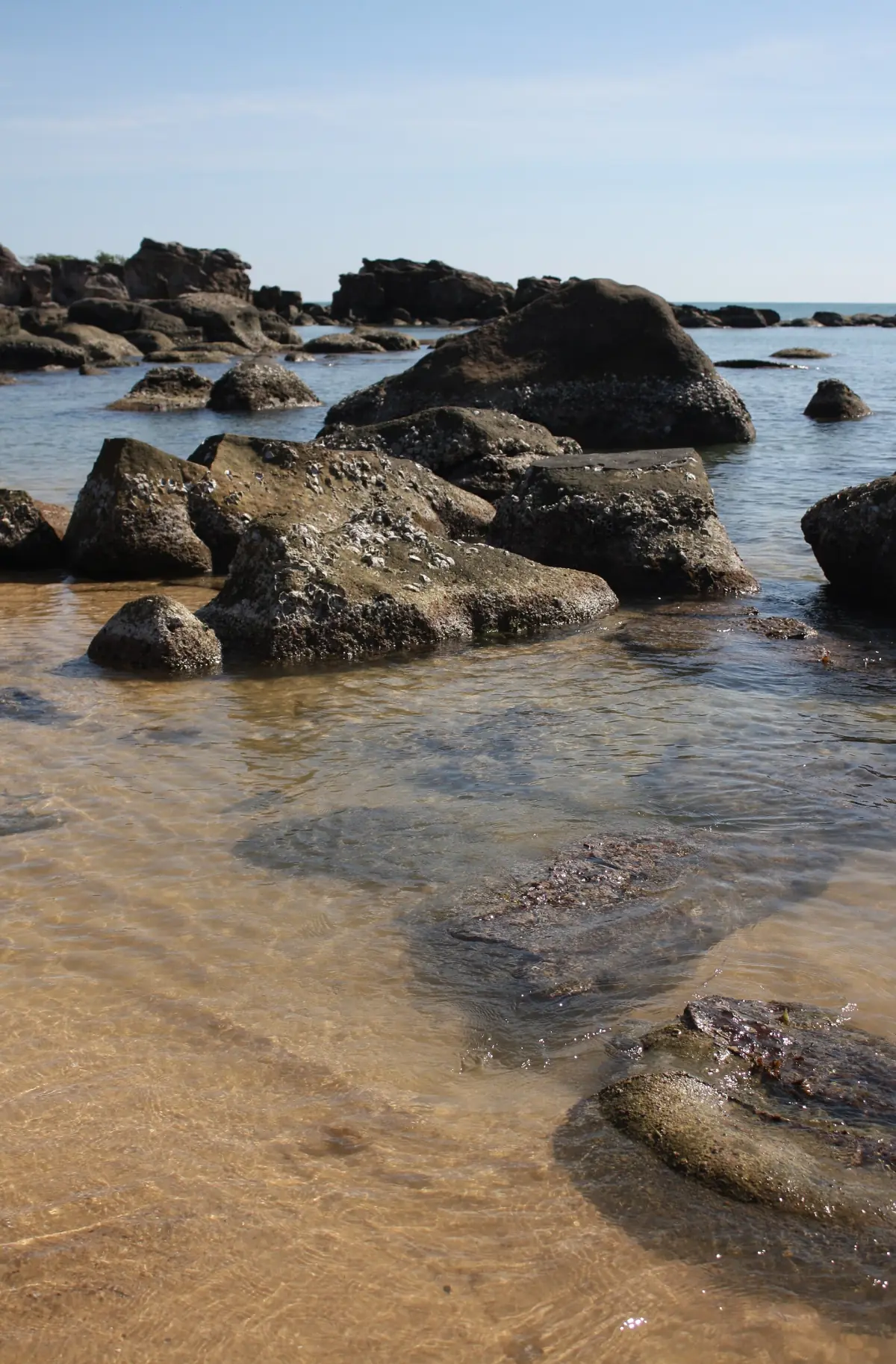
Beaches on Phu Quoc
Eight beaches, from Sao to Long Beach.

Snorkeling and island hopping
Boat trips to the An Thoi islands and the safety rules.

Where to stay on Phu Quoc
The main areas compared, plus the visa rules for the island.
Other regions follow their own seasons, so check the weather before you add a stop on the mainland. The guides cover Nha Trang, Hoi An and Ha Long Bay.
Phu Quoc weather: frequently asked questions
What is the best month to visit Phu Quoc?
For the lowest rainfall, choose December to March. February has the least rain in the table at 20.6 mm, and January is close at 31.0 mm.
When is the rainy season?
Roughly May to October, with the wettest month in September at 542.3 mm. November is still wet at 179.9 mm, so some sources run the rainy season to November.
Is it hot all year?
Yes. Monthly means stay between 80.2°F and 84.2°F (26.8°C to 29.0°C). April and May are the warmest months and January is the coolest.
Is October a good month for the beach?
October is still in the wetter half of the year, with 325.6 mm. Beach days are possible, but plan flexible days and check sea conditions before any boat trip.
Can weather cancel boat trips and ferries?
Yes. Operators may change routes or cancel when wind and waves are high, and ferries were suspended for a time on 14 August 2026. Check with your operator before you travel.
Which months are the hottest?
April and May, with a monthly mean of 84.2°F (29.0°C). January is the coolest at 80.2°F (26.8°C), so the range across the year is small.